
NEWS
SHOCKING 74 MINUTES AGO: the Trump administration submitted arguments to the Supreme Court claiming that no court — including the Supreme Court — can question Trump’s decision to deploy military troops against US cities

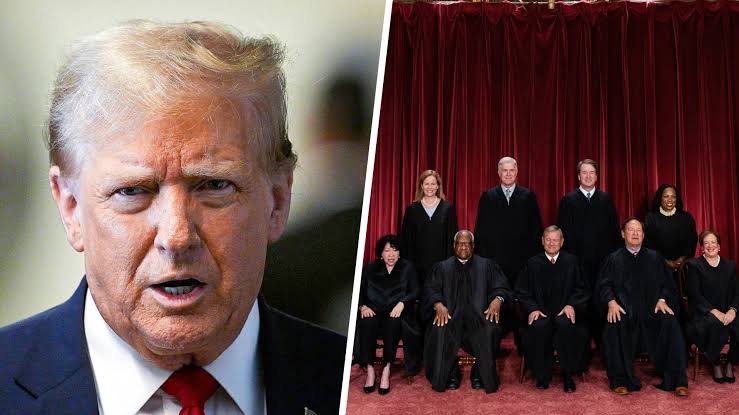
A shocking new legal development has sent political observers into a frenzy after the Trump administration submitted arguments to the Supreme Court asserting that no court in the United States — not even the Supreme Court itself — has the authority to question Donald Trump’s decision to deploy military troops against U.S. cities.
According to the filing, which surfaced roughly 74 minutes ago, Trump’s legal team is pushing an unprecedented interpretation of presidential power—one that critics say could fundamentally reshape the balance of power in the American government.
An Argument Rooted in Expansive Presidential Authority
In the brief, Trump’s attorneys claim that decisions tied to deploying military forces fall under “exclusive and unreviewable executive authority.”
The argument frames the president’s commander-in-chief powers as completely immune to judicial oversight—even if a president orders armed troops into American streets.
Legal experts warn this interpretation is far beyond anything argued by previous administrations, Democrat or Republican.
One constitutional scholar reacted bluntly:
“If accepted, this would erase one of the judiciary’s most important checks on executive power.”
Critics Call It a Direct Threat to Democracy
The reaction was swift across legal, political, and civil rights communities.
Opponents argue the administration’s position could justify:
- Military crackdowns on protest movements
- Deployment of troops without congressional input
- A president acting with near-monarchical authority
- No legal way for courts to stop abuses of power
Civil liberties advocates called the filing “a nightmare scenario,” warning that it would leave Americans vulnerable to politically motivated military actions.
Several political commentators noted that this argument resembles the kind of absolute immunity Trump’s lawyers have tried to claim in multiple legal battles—now expanding that theory into the military domain.
Supporters Frame the Argument as Necessary for Security
Some Trump allies defend the filing, insisting the president needs full flexibility to respond to:
- Large-scale unrest
- Domestic terrorism threats
- National emergencies requiring rapid action
They argue that federal courts interfering with military deployment decisions could delay critical responses and compromise national security.
However, even some conservative legal voices expressed quiet concern, suggesting this interpretation may go “too far, even for strong-unitary-executive theorists.”
What Happens Next?
The Supreme Court will now decide whether to take up the case or reject the administration’s sweeping argument.
If the Court entertains Trump’s position, it could spark one of the most consequential constitutional battles in modern American history—one that tests the limits of presidential authority and the judiciary’s power to serve as a check and balance.
If the Court rejects the position outright, it would reaffirm that no president stands above the law, especially when deploying the U.S. military on domestic soil.
A Defining Moment for America’s Constitutional System
The filing highlights once again how deeply polarized—and legally uncharted—the American political landscape has become.
Whether Trump’s argument is dismissed or escalates into a landmark Supreme Court showdown, one thing is clear:
the debate over executive power is far from over, and its outcome could shape the country for generations.

BREAKING: Iran’s New Oil Rule Could Shake the Global Dollar System

U.S. Intelligence Network Reports Iran Has Activated Sleeper Cells Allegedly Targeting President Donald Trump, Defense Secretary Pete Hegseth, and Other Top Political Powerhouses

Iran-Isreal war LIVE: Iraq shuts down oil ports after 2 tankers attacked; Indian national killed, 38 rescured

“‘A Tyrant’: Ex-FBI Chief James Comey Unloads on Trump After Indictment—Read His Explosive Reaction”

CHRIS BROWN SHUTS DOWN ATLANTA! Wild After-Party Scenes Have Fans in a Frenzy — See the Videos & Photos Everyone’s Talking About! 👀🎉
NEWS: This Supreme Court Ruling Could Cost the U.S. Trillion

URGENT: Trump Says U.S. Forces Captured Maduro After ‘Large-Scale Strike

NEWS: Coco Gauff becomes first player ever to beat Iga Swiatek four times in a row in straight sets…👎

Behind Closed Doors: Jack Smith Defends Trump Investigations ⚡ What lawmakers heard 👇

GOP Turns on Trump! Major Republicans Backpedal on ‘Run Venezuela’ Plan — What It Means Next Even Trump’s closest allies are distancing themselves from his boldest foreign policy claims. Watch now and decide — is the GOP finally breaking away?

Michael Jackson’s daughter Paris has broken her silence: “My dad used to…See more…
